
Opening of the New ICU

Holly Burns, Sue Bubb, and Margaret Lenny share memories of designing, expanding, and transitioning to the new ICU, emphasizing teamwork and patient-centered care.
From planning the space to welcoming the first patient, this moment captured the dedication, teamwork, and commitment that shaped the ICU into the upgraded unit it has grown into.
A Growing Need for Critical Care
When Queensway Carleton Hospital first opened in 1976, the intensive care unit looked very different from what it is today. The early ICU could not support isolation rooms and did not yet have the advanced bedside technology that critical care would later require. Dr. Choudhri explains, “Initially, we would be transferring almost anybody who was sick enough to require mechanical ventilation for more than a couple of days…”
As the hospital grew, the need for a more modern ICU to support increasingly complex patient care also grew.
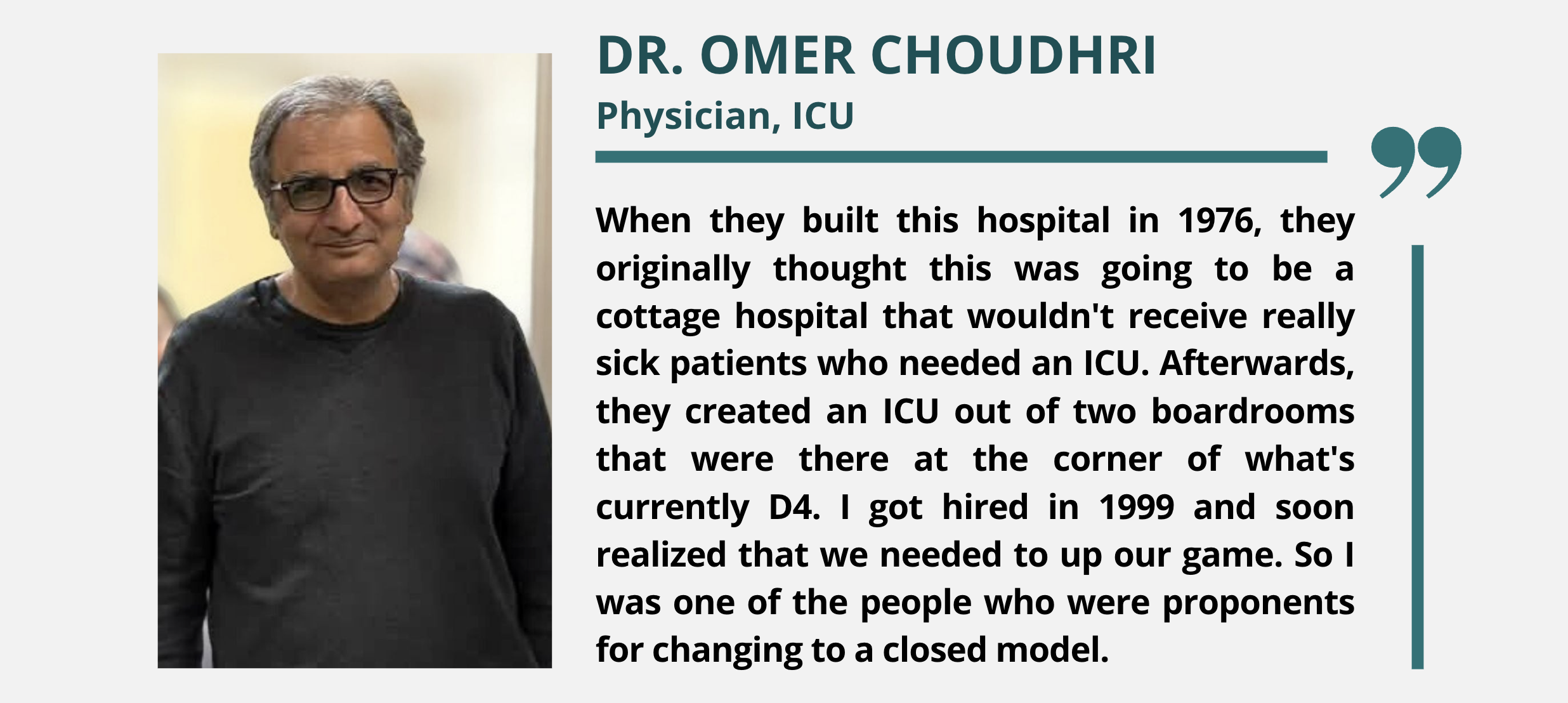
Dr. Omer Choudhri talks about the ICU outgrowing its space and the need for expansion.
Moving Into the New ICU
When the new ICU opened on February 9, 2005, it marked an important milestone for the hospital. The day included ribbon cuttings and a small celebration with coffee and cake.
One meaningful moment stood out: the first patient helped cut the ribbon, reflecting the hospital’s adherence to patients.
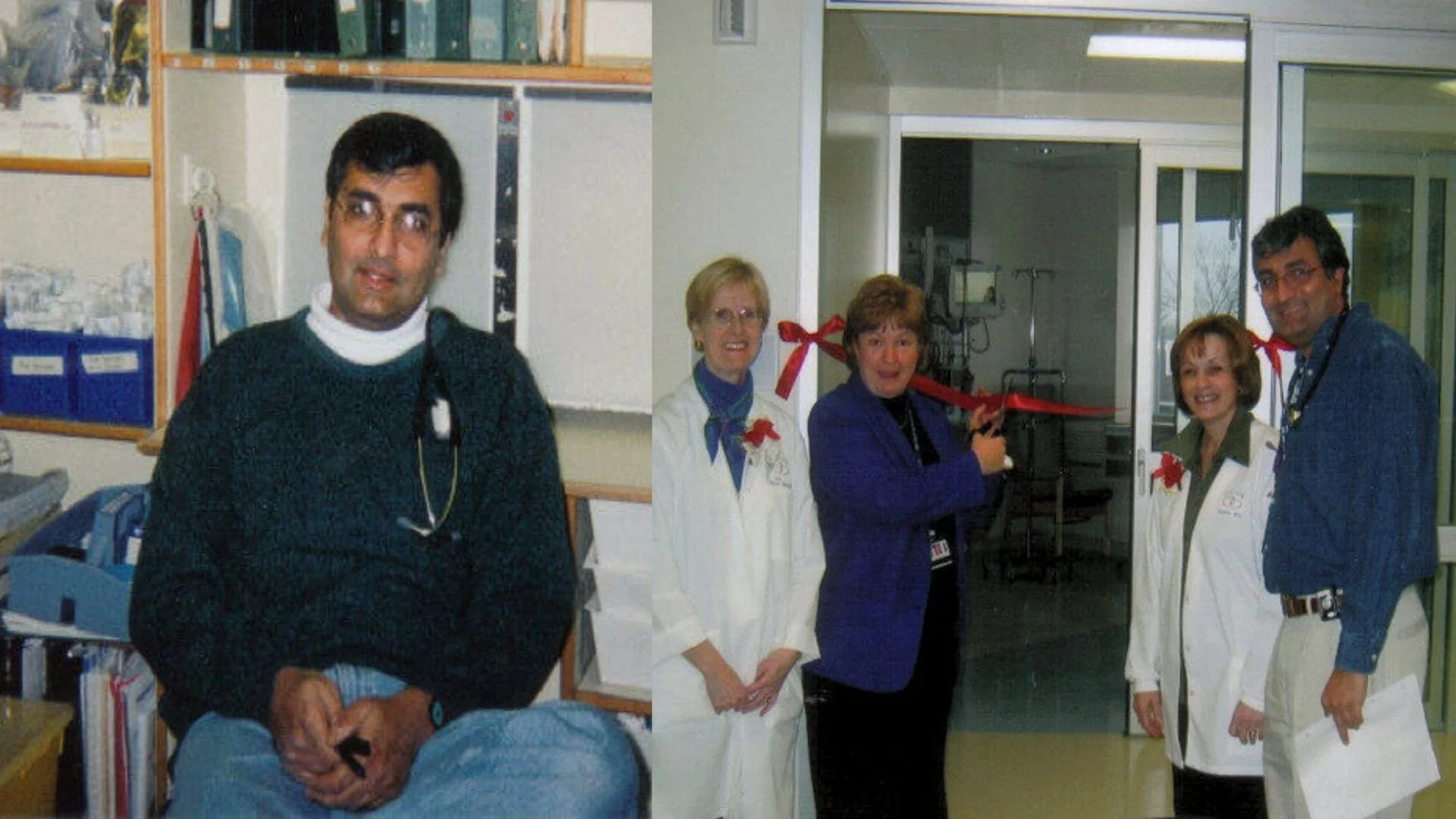
Left photo: Dr. Omer Choudhri seated in the cozy former ICU office. Right photo: Dr. Choudhri at the opening ceremony of the new ICU on February 9, 2005.
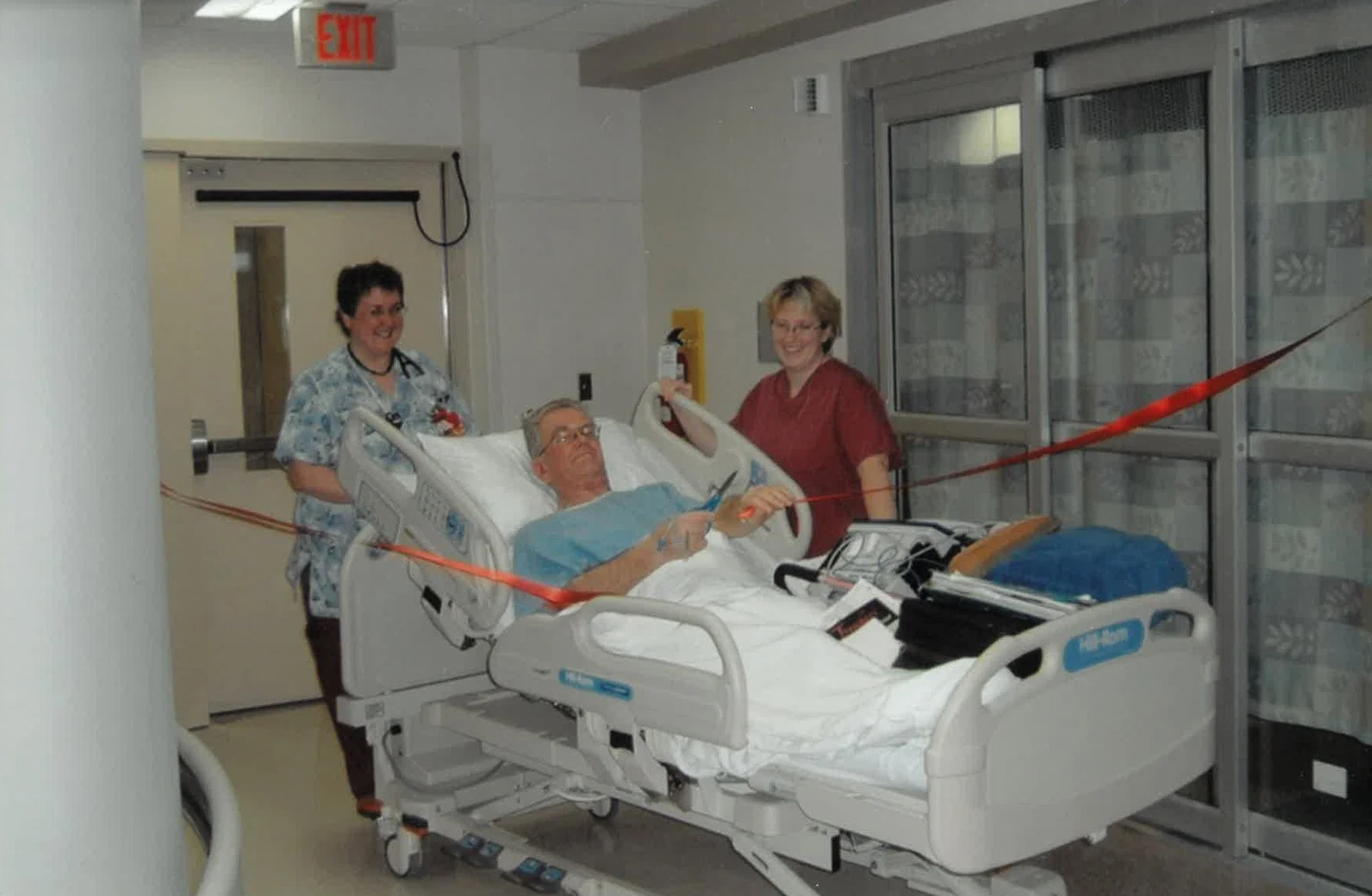
The first patient at QCH’s new ICU takes part in the ribbon-cutting ceremony, symbolizing the hospital’s dedication to compassionate, patient-centered care.
Advancing Critical Care at QCH
The ICU has continuously evolved with technology and expertise. Dr. Iyengar notes, “Critical care has a lot of demands on resources… we require complex equipment, such as ventilators and complex cardiac monitoring… We have pulmonary artery catheters… pretty much everything you need on a high-level Advanced Intensive Care Unit we have here now.”
Over time, the ICU became a regional referral Centre, managing increasingly complex cases, reducing transfers, and serving as a model for other community hospitals. Dr. Choudhri highlights one of his proudest moments: “We were able to do some very advanced things… within a couple of years… even when we thought we would transfer some of the patients, the nurses were like, ‘We don’t need to transfer this patient.' “This moment marked the realization that the closed-model ICU, which started in 2006, was working exactly as intended
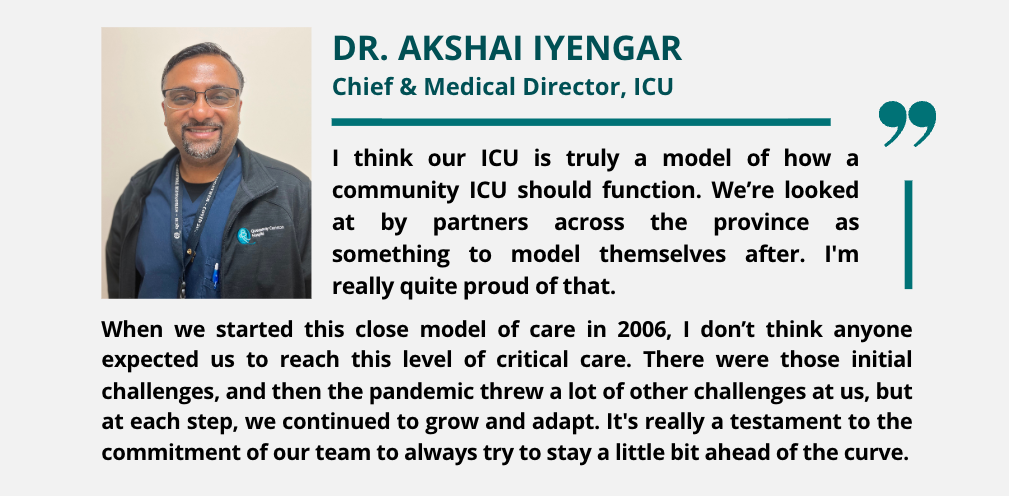
Dr. Akshai Iyengar talks about the ICU’s advanced monitoring and life-support equipment.
Laying the Foundations of ICU
The ICU’s growth is built on collaboration. Physicians, nurses, respiratory therapists, and other healthcare professionals work together to care for patients during defining moments. Dr. Iyengar emphasizes, “We are in a very team-based environment… The only way to take care of our sick patients is to work as a team.” Each step of this evolution reflects the dedication of staff who helped shape the unit over the years.
Early leadership played a critical role in laying this foundation. As physician lead for the ICU group, Dr. Craig Reid helped guide the unit through a pivotal transition to departmental status, becoming its first Chief of Critical Care. In this role, he worked closely with senior administration and clinical leaders to secure essential funding and establish the infrastructure required for a modern ICU. This included meeting criteria for a physician-led critical care response team, expanding advanced mechanical ventilatory support capacity, and launching key programs such as continuous renal replacement therapy, later evolving into SLED.
These developments were more than technical milestones; they opened the door to sustained funding, on-call physician support, and a higher level of coordinated care. Just as importantly, Dr. Reid collaborated with nursing and medical leadership to define how the unit would function day-to-day, ensuring that systems, workflows, and standards were in place to deliver safe, timely, and structured care.
Reflecting on that period of growth and what the team was able to build together, Dr. Reid shared:
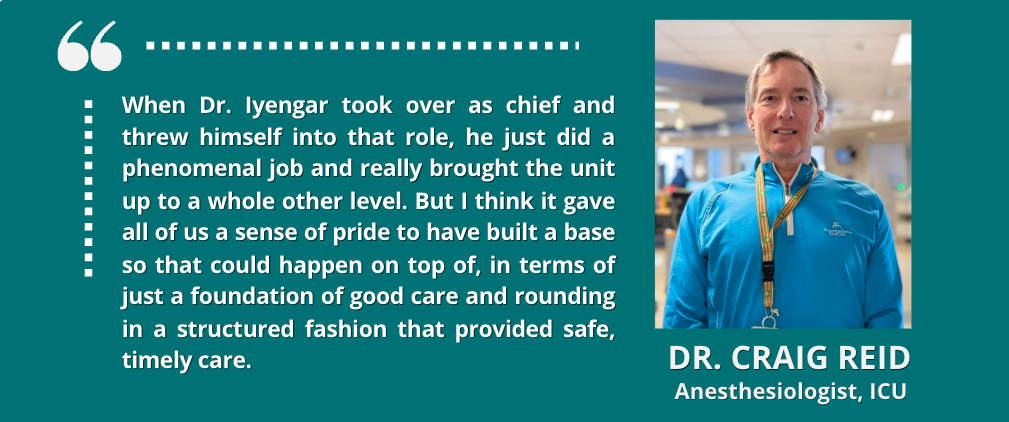
Dr. Craig Reid talking about all ICU patients now being under the care of intensivists.