
Story 19: Mock Disasters: Preparing for the Unexpected
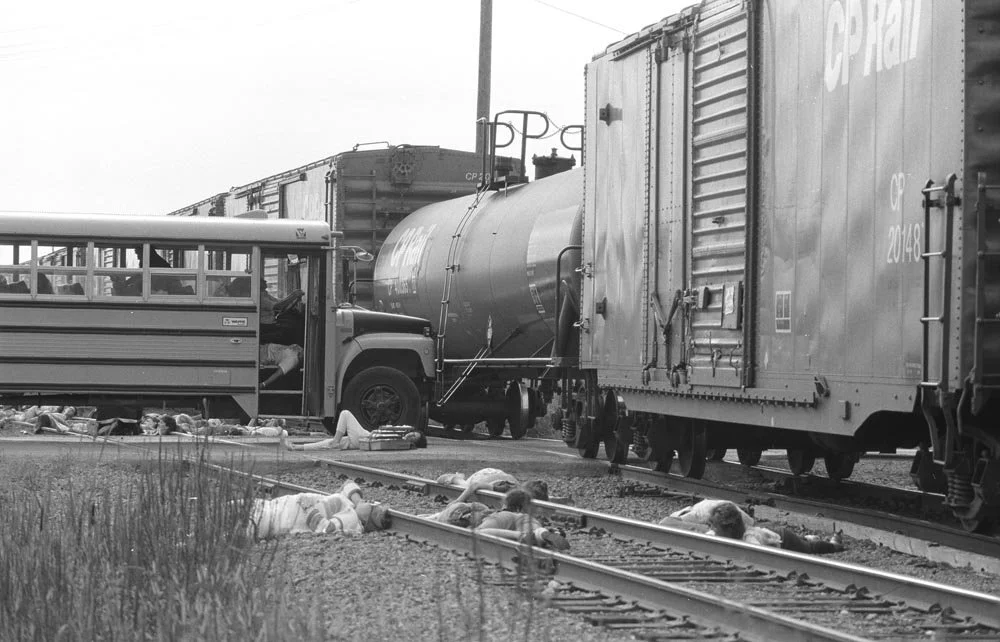
A mock disaster set for Operation Evening Star on September 13, 1990. Photo source: Farand, R. (1990 December). Disaster Train. Colin Churcher’s Railway Pages.
Operation Evening Star
On September 13, 1990, “Operation Evening Star” kicked off with simulated disasters including a train derailment with 107 mock casualties and an explosion at the Carp arena. Hosted by the Regional Municipality of Ottawa-Carleton’s Emergency Measures Department, the bi-annual exercise rushed mock victims to QCH for further treatment. These regional drills were designed to test the emergency preparedness of local fire, police, paramedic, and hospital teams.
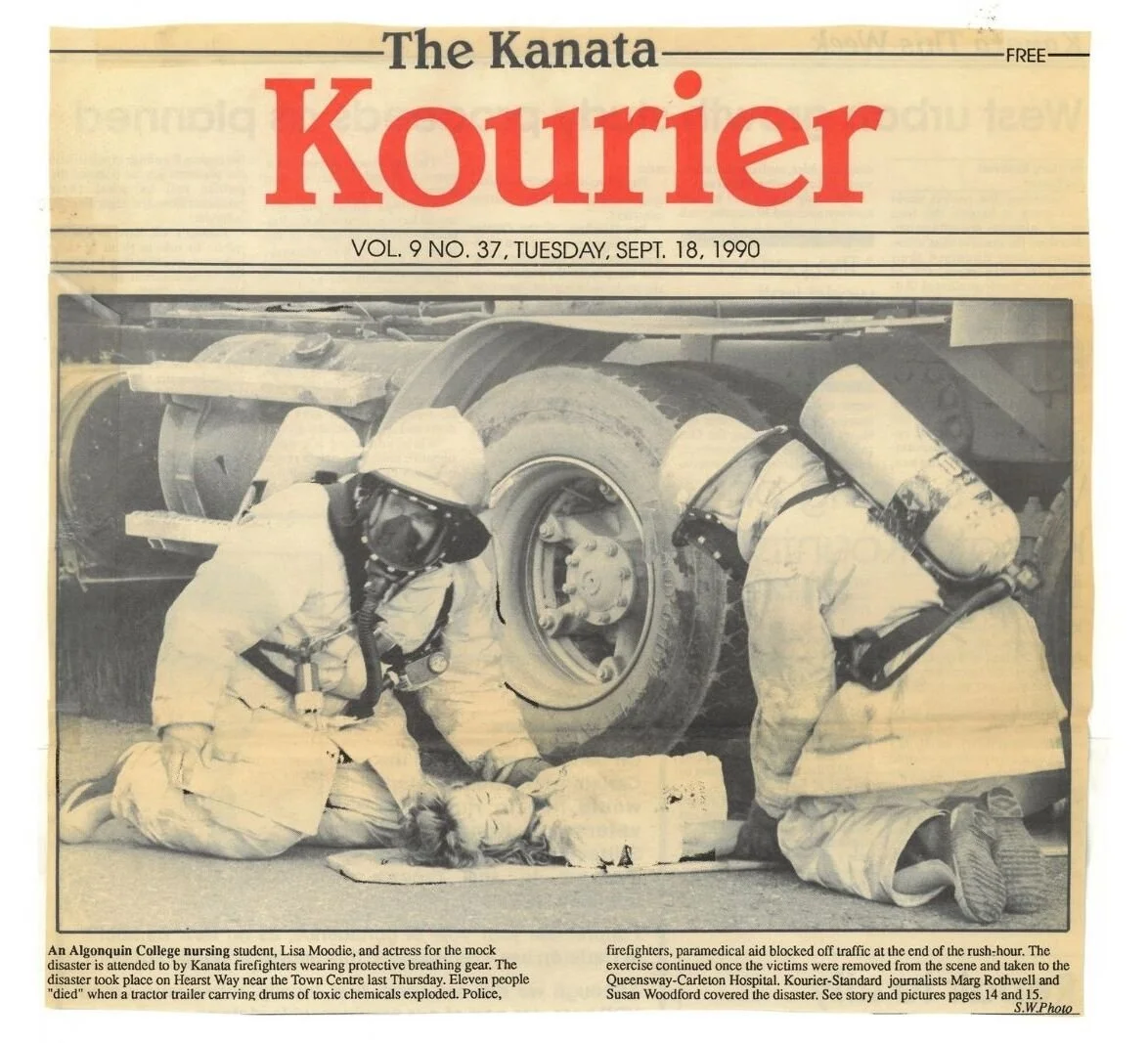
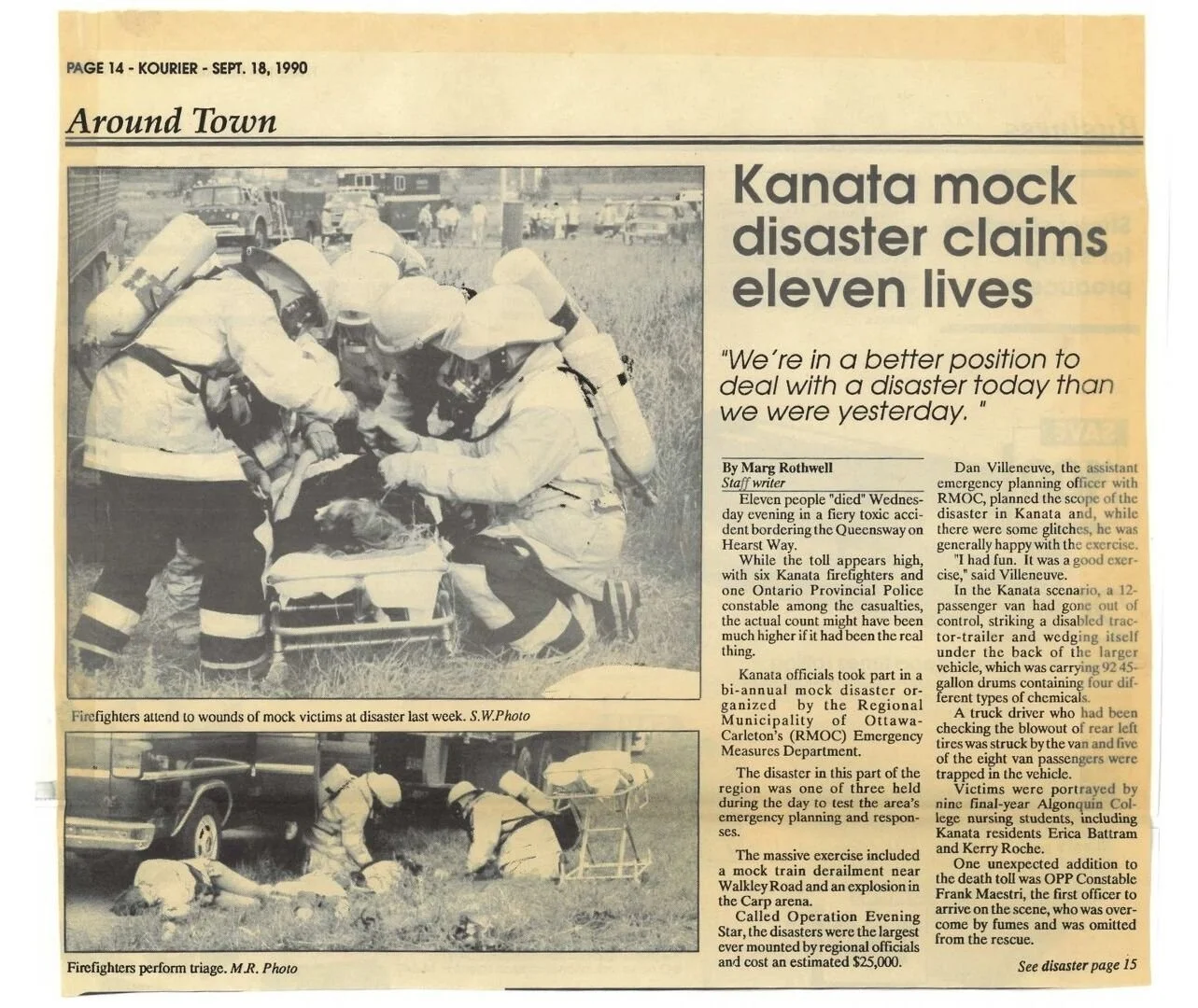
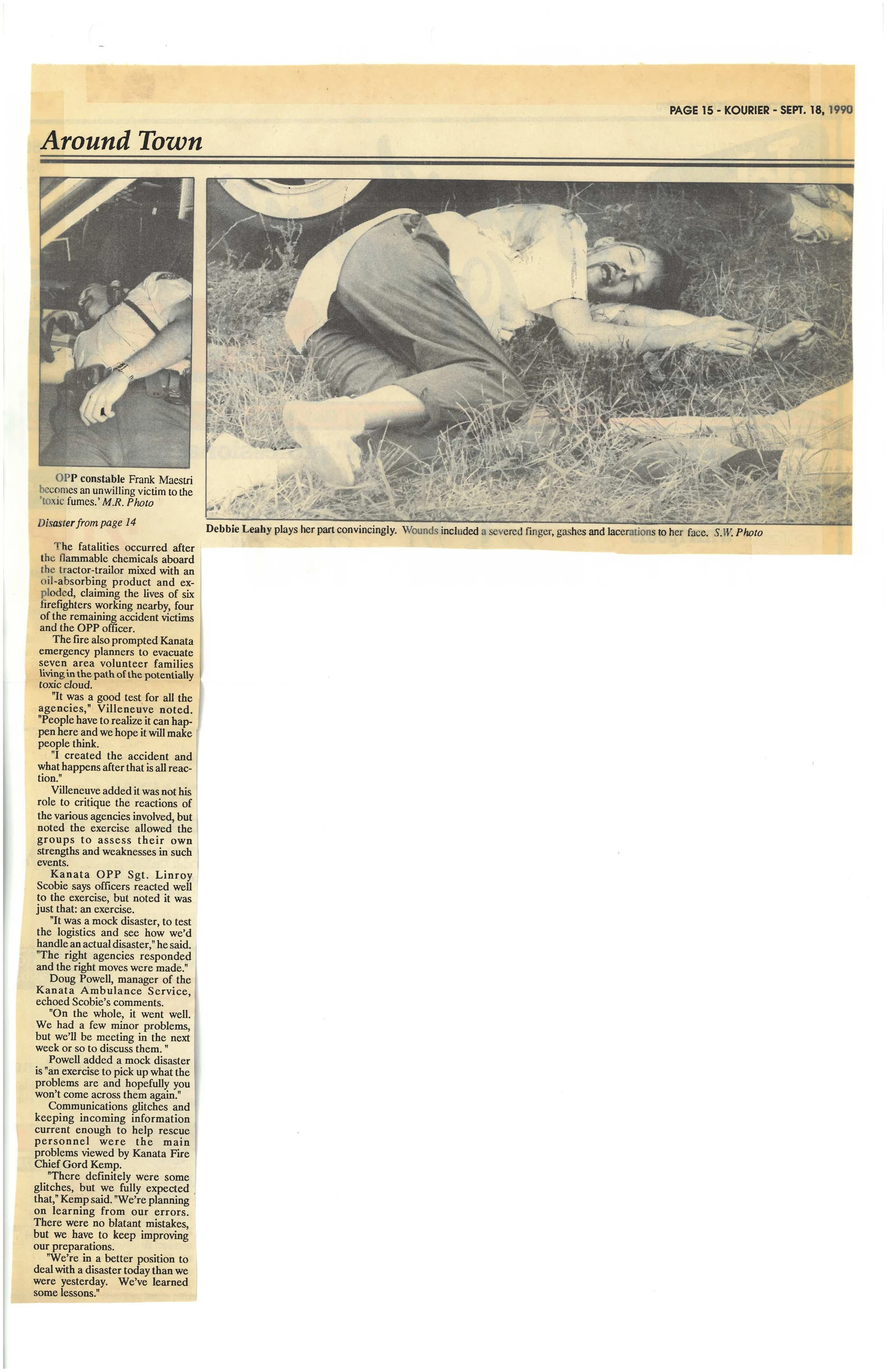
Nursing Education Hosting Mock Disasters
Below, is a story submission from Anne Brackstone, one of QCH’s earliest nurse educators, reflecting on the importance of hosting mock drills to prepare for emergencies.
Nurse Educators were in place when the hospital opened. There were two nurse educators who worked with staff in the clinical area and other parts of the organization. Both educators belonged to a regional group of health care educators and were involved in regional joint exercises and potential disaster management.
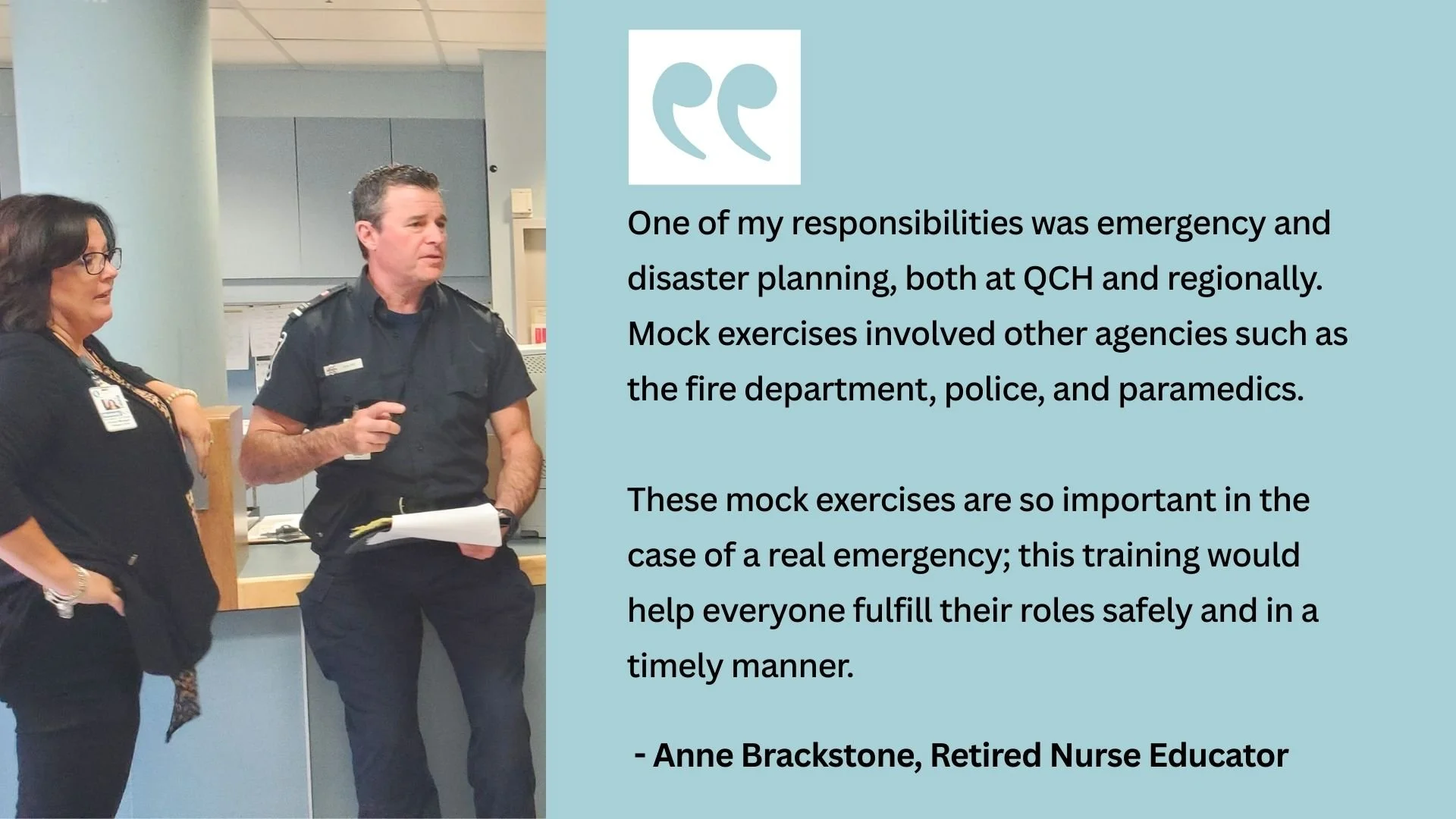
Fire drills were done on each shift monthly, in liaison with the fire department. One mock fire drill was being held in one of the clinical areas and I told the staff that the scenario was “a fire in the small kitchen” I was told “oh don’t worry about it, it happens all the time!” When the mock fire drills were held, the Director on call was paged and had to call in and assess the situation. In one early morning fire drill, the Director had not called in and in the debrief he told us that he heard something buzzing but ignored it as he thought it was “the bread maker!
Other mock exercises involved other agencies such as fire, police, and paramedics. I was the chairperson of the regional group, and I was required to carry a pager 24/7 in case I had to alert the other health care agencies of a potential issue. At one time a planning meeting was held at CSIS and I had my pager on but was told I had to hand it in but could bring in my gun!
A disaster exercise was planned for QCH, involving a bomb threat and as in other emergencies there was a colour code to announce Code Black which meant it was a bomb threat and the staff’s role was to search for anything unusual or things not in their usual place. The Fire Department Educator and I hid the “bomb”, a brick wrapped in black paper with a couple of battery packs attached. Staff were to call if they found anything unusual.
We received many calls and found 11 lunch boxes, pairs of runners, wallets, unfinished food, and clothing that the staff had found. Unfortunately, no one found the bomb which was in one of the nurse’s cupboards where medications and linen etc. were stored. This was an opportunity for educators to review the emergency codes.
An evacuation exercise was held using school students in place of the patients and everyone had to be evacuated out of the hospital and the students decided to use this opportunity to have their own “drama class” with much screaming and laughing.
These mock exercises are so important in the case of a real emergency. This training would help everyone fulfil their roles safely and in a timely manner.
Drills for Real-World Readiness
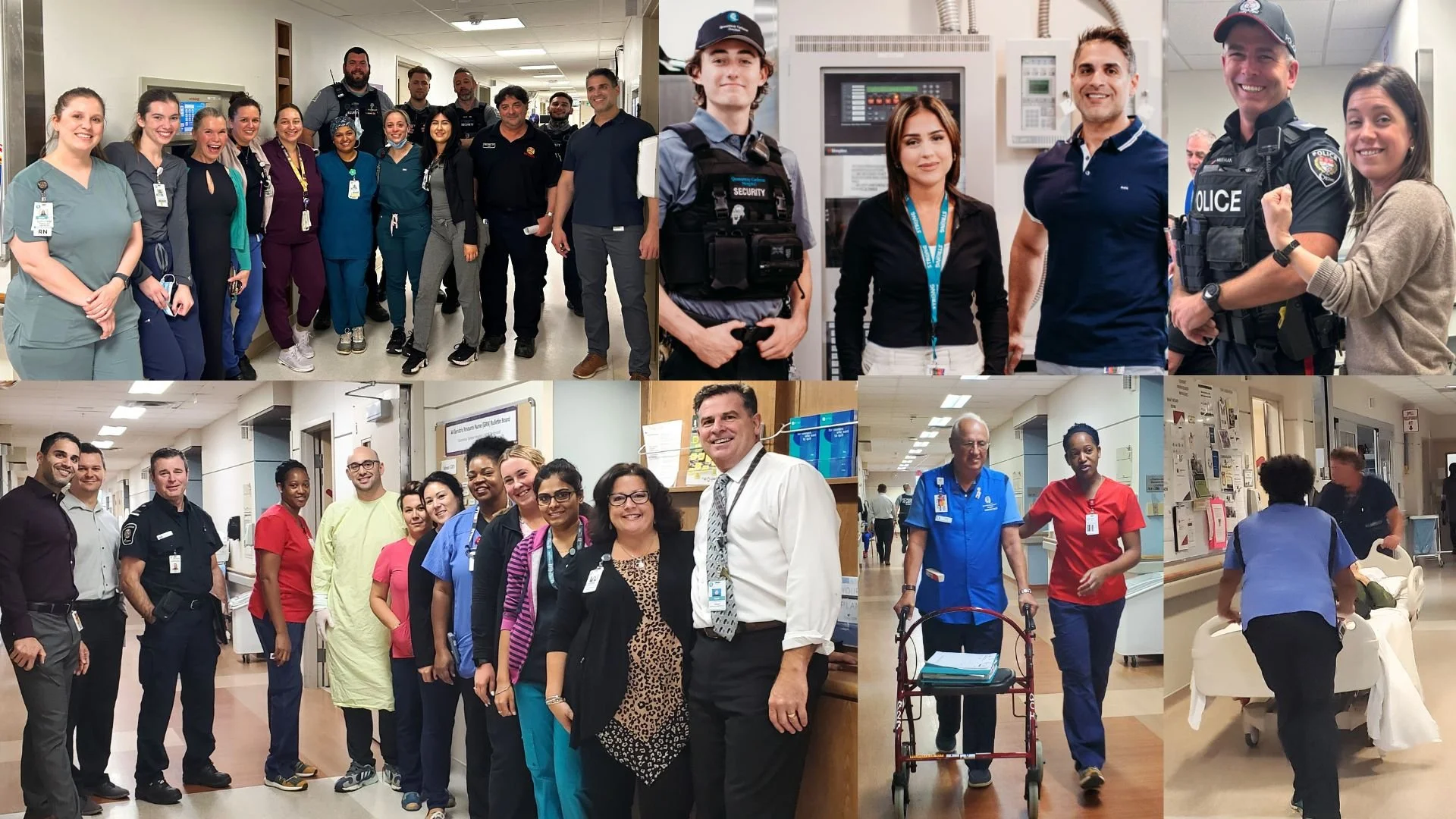
Mock fire drills, code reds, and code blacks hosted at QCH.
As part of emergency management, QCH staff has participated in multiple high-pressure mock scenarios, including a fire in the QCH kitchen, bomb threat simulations, and full hospital evacuations. These drills were opportunities to review hospital policies and procedures while ensuring emergency preparedness.